















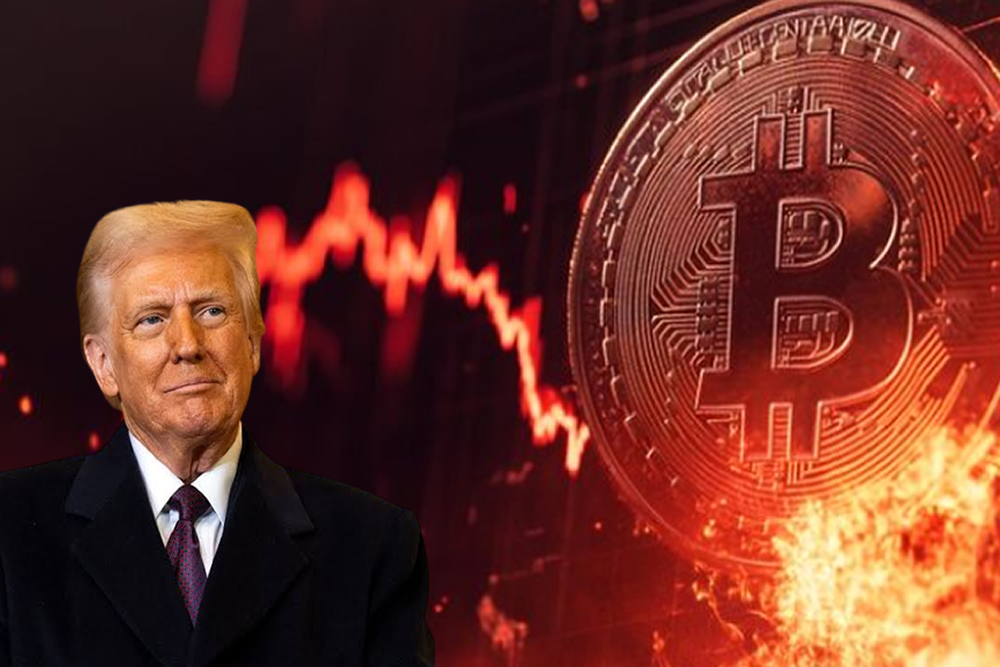
The price of Bitcoin slid below $62,000 following a sudden escalation in geopolitical tensions between the United States and Iran. The market decline was triggered by comments from U.S. President Donald Trump, who declared that a previous ceasefire agreement was over and warned that U.S. military strikes against Iran would continue. The development caused a wave of caution across global markets, leading to falling crypto prices and a sharp jump in oil costs.
Global financial markets experienced sudden volatility following a sharp increase in military tensions in the Middle East. Bitcoin, the world’s largest digital currency, fell below the crucial $62,000 level shortly after U.S. President Donald Trump announced that a brief ceasefire agreement with Iran had officially collapsed. The comments quickly shifted investor behavior, driving capital away from speculative digital assets and into traditional safe havens.
The market drop began after President Trump declared the memorandum of understanding (MOU) with Iran finished. Trump accused Iran of violating the terms of their earlier agreement and warned that U.S. military operations against Iranian targets would continue.
The direct response from the investment community was swift. Bitcoin’s price slipped past the $62,000 mark as traders pulled back to avoid unnecessary risks. The downturn was felt across the broader cryptocurrency market, with other major tokens experiencing notable price declines as sell-offs picked up pace.
At the same time, traditional financial sectors reacted strongly to the news. Concerns over potential shipping disruptions and regional instability caused global oil prices to surge, with international benchmarks jumping.
The sudden return of hostilities came as a disappointment to markets, which had recently enjoyed a period of relief. The U.S. and Iran had previously agreed to diplomatic talks and a temporary ceasefire, which initially helped lift investor confidence and allowed digital asset prices to recover over the preceding week.
However, the rapid breakdown of the agreement highlights how sensitive modern financial markets remain to major geopolitical events. When tensions rise in regions key to global energy shipping, it typically creates worries about inflation. If fuel and transport costs rise significantly, central banks are often forced to keep interest rates higher for longer to combat inflation an environment that historically makes riskier, non-yielding assets like cryptocurrencies less appealing to large institutions.
While Bitcoin has frequently shown an ability to recover from sudden political shocks, its near-term price trajectory remains closely tied to global stability. Analysts note that the market is likely to remain highly volatile as investors monitor whether the situation escalates further or if diplomatic channels can be reopened. For now, the focus remains firmly on how the U.S. administration moves forward and the potential economic impacts of rising energy costs.