











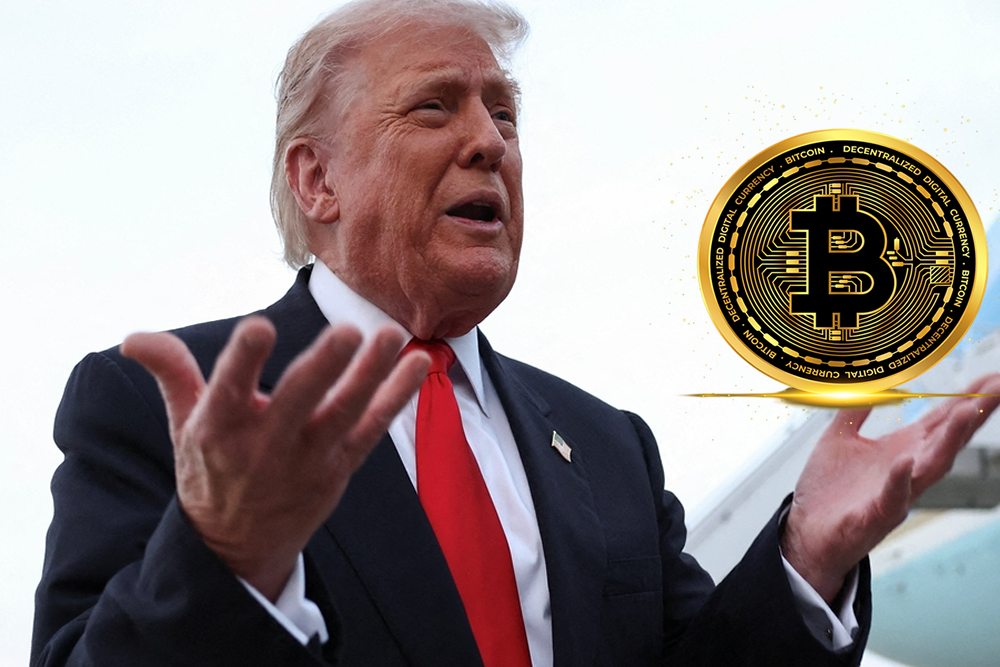
U.S. President Donald Trump has declared a broad economic campaign against Iran following escalated tensions over the Strait of Hormuz waterway. Despite the potential for heightened geopolitical instability, Bitcoin has held its ground near $72,000. Analysts attribute the cryptocurrency’s stability to its growing role as a hedge against sovereign risk and broader financial market disruption.
United States President Donald Trump has announced a major economic pressure campaign against Iran following escalated tensions over the Strait of Hormuz.
Despite the threat of deepened geopolitical conflict in the Middle East, digital asset markets demonstrated notable resilience. Bitcoin (BTC) held firm near the $72,000 price level as investors evaluated the potential broader financial fallout of the campaign.
In a public statement, President Trump described the upcoming diplomatic and economic measures as a large-scale attempt to isolate Iran internationally. The policy shift comes as the key maritime transit route through the Strait of Hormuz remains restricted, disrupting international shipping routes and global crude oil logistics.
Despite the heightened threat of supply chain shocks and military friction, major digital assets resisted widespread sell-offs:
Price Stability: Bitcoin maintained its local support range between $72,000 and $73,000, avoiding the sharp panic liquidations typical of previous geopolitical events.
Energy Market Impact: While crude oil prices experienced upward volatility due to transit blockades, digital assets held a relatively low correlation to short-term commodity price spikes.
Institutional Liquidity: On-chain metrics showed steady spot liquidity across major exchanges, suggesting that institutional holders viewed the geopolitical developments as isolated to traditional energy and shipping sectors.
Financial commentators observed that market participants appear to be pricing in prolonged economic sanctions rather than expecting immediate kinetic escalation.
The geopolitical standoff centers on the Strait of Hormuz, a critical maritime passage through which roughly 20 percent of global petroleum supplies typically travel. Previous military friction and regional blockades in the region have led to sharp spikes in global oil prices, impacting international inflation rates and bond yields.
Historically, sudden international crises have triggered short-term volatility in cryptocurrency markets as traders temporarily seek refuge in cash or gold. However, as digital assets mature, long-term investors increasingly view Bitcoin as an alternative, non-sovereign store of value during times of foreign policy disruption and currency instability.
Bitcoin’s stability during the announcement of new sanctions highlights changing investor behavior during foreign policy conflicts. While traditional energy markets remain exposed to supply bottlenecks, the digital asset ecosystem continues to demonstrate price resilience amid ongoing geopolitical friction.